
Open Source. API-First.
Built to Be Extended.
Most logistics platforms are black boxes — closed source, poorly documented, and built for forms-based configuration rather than programmatic control. Fleetbase is different. The full source code is on GitHub. Every capability is accessible via a documented REST API. The extension system lets you build custom modules that run inside the platform. And self-hosted deployment means your team owns the infrastructure.
The old way
Why developers hate working with most logistics platforms
A logistics platform engineers actually want to work with
Open source, API-first, extensible, and deployable anywhere.
Full REST API — Every Feature Accessible
Not a subset of features — every platform capability is accessible via a documented REST API. Order management, driver assignment, route planning, tracking events, POD retrieval, analytics, fleet management, user and permissions — all programmable.
- Complete OpenAPI specification with request/response examples
- Versioned endpoints with stable API contracts
- API key scoping — restrict keys to specific resources and operations
Real-Time Webhooks
Every meaningful platform event fires a webhook. Order created, assigned, picked up, delivered, failed — and dozens more. Configure multiple endpoints, filter by event type, and rely on automatic retry with exponential back-off when delivery fails.
- Events for the complete order and delivery lifecycle
- Per-endpoint event type filtering
- Delivery log with retry history, response codes, and failure reasons
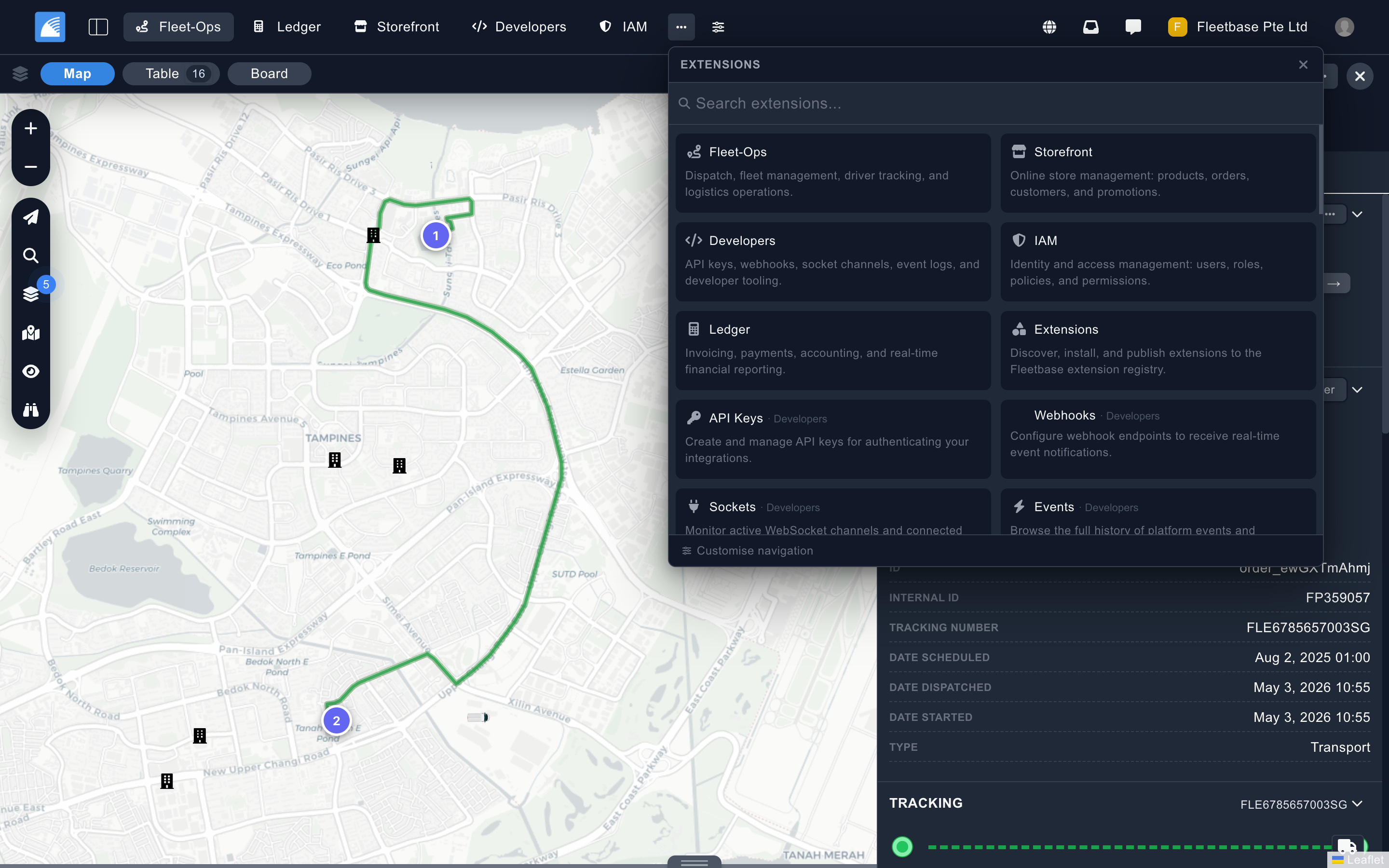
Extensions SDK — Build Custom Modules
Don't fork the core — extend it. The Fleetbase Extensions SDK lets your team build custom modules that run inside the platform: custom API endpoints, background workers, database models, and UI panels rendered in the Ember.js console — all within the existing auth context.
- Laravel-based backend extensions with custom routes and models
- Ember.js frontend engine for console UI panel development
- Extension scaffold generator for rapid new module bootstrapping
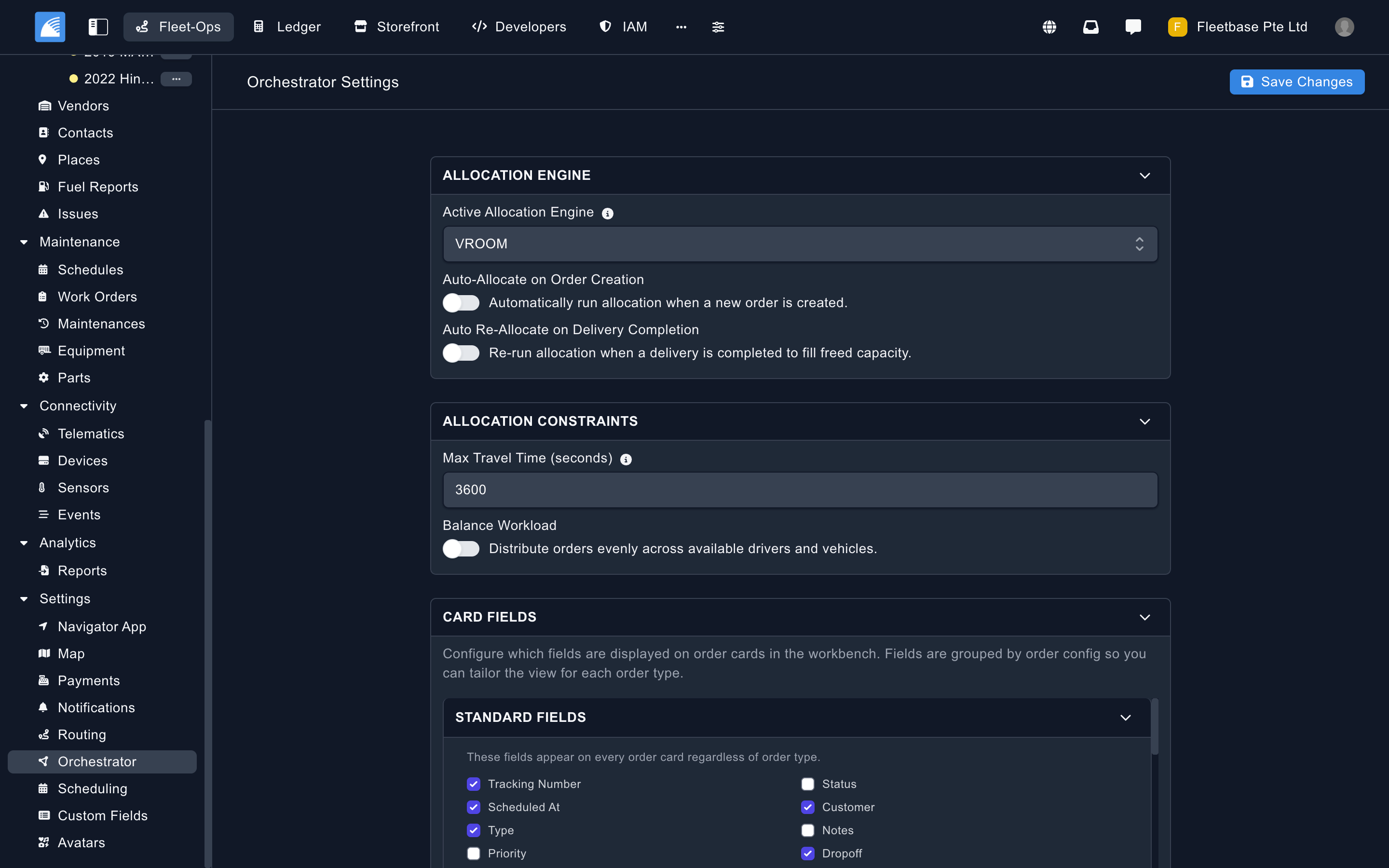
Open Source — Full Code Access
Fleetbase is licensed under AGPL-3.0. Every line of backend and frontend code is on GitHub — readable, forkable, and security-assessable. Understand exactly what's running in your environment. Contribute upstream. Or use a commercial licence for proprietary modifications.
- Full backend (Laravel/PHP) and frontend (Ember.js) source on GitHub
- Active open source community with maintained issue tracker
- Commercial licence available for proprietary modifications
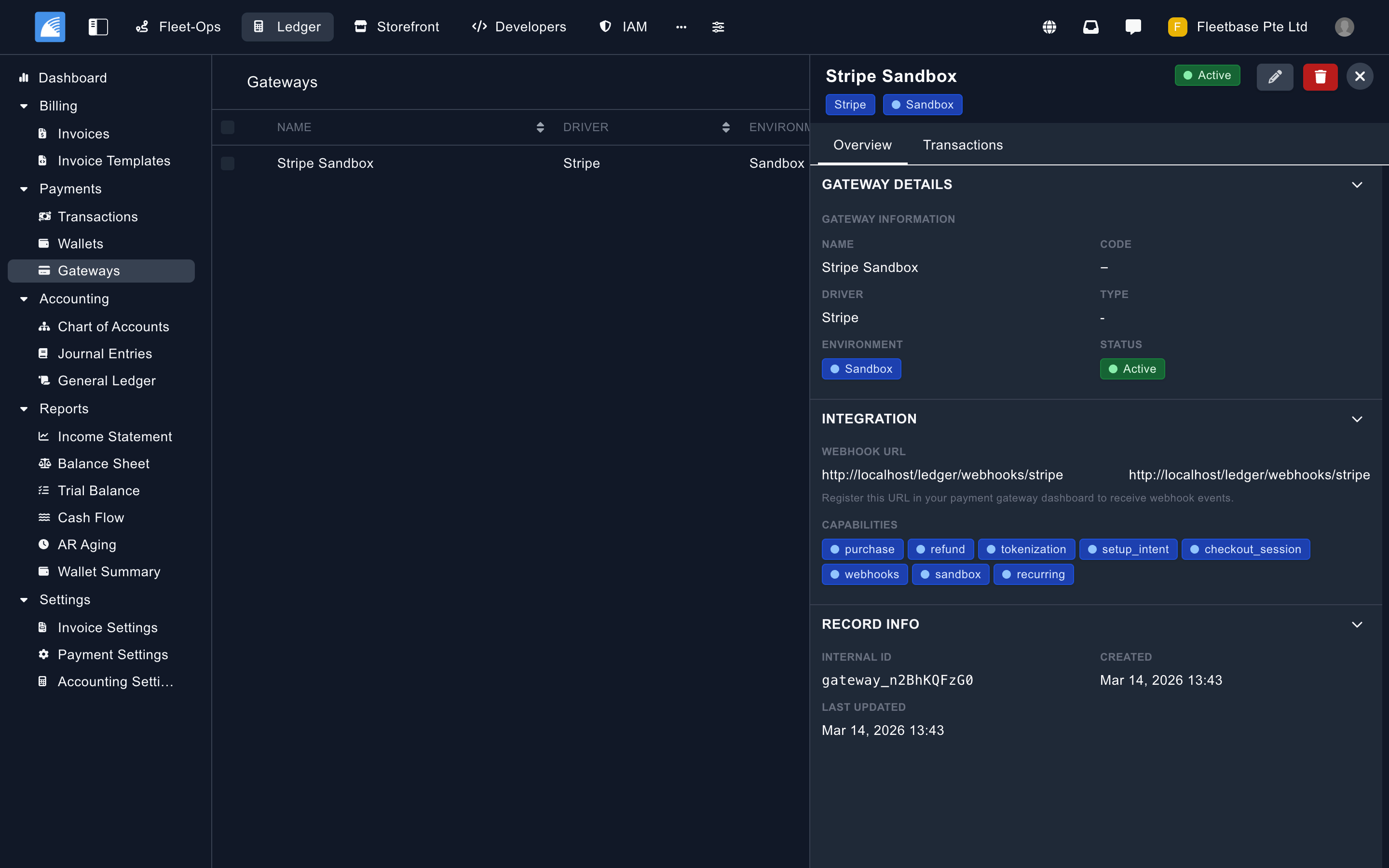
Self-Hosted Deployment
Deploy Fleetbase on your own infrastructure — AWS, GCP, Azure, bare metal, or Kubernetes. Docker Compose for development. Helm charts for production. No external data dependencies. Your data stays in your environment, on your infrastructure, under your control.
- Docker Compose deployment for development and staging
- Kubernetes Helm charts for production deployments
- Environment variable configuration — no hard-coded credentials
Developer Console & Observability
Every API request, webhook delivery, and platform event is logged with full request/response detail in the developer console. Debug integrations in real time. Monitor webhook delivery reliability. Trace event flows from trigger to consumer without external tooling.
- API request log with method, status, latency, and full request/response
- Webhook delivery log with retry history and failure diagnostics
- System event stream for real-time integration debugging
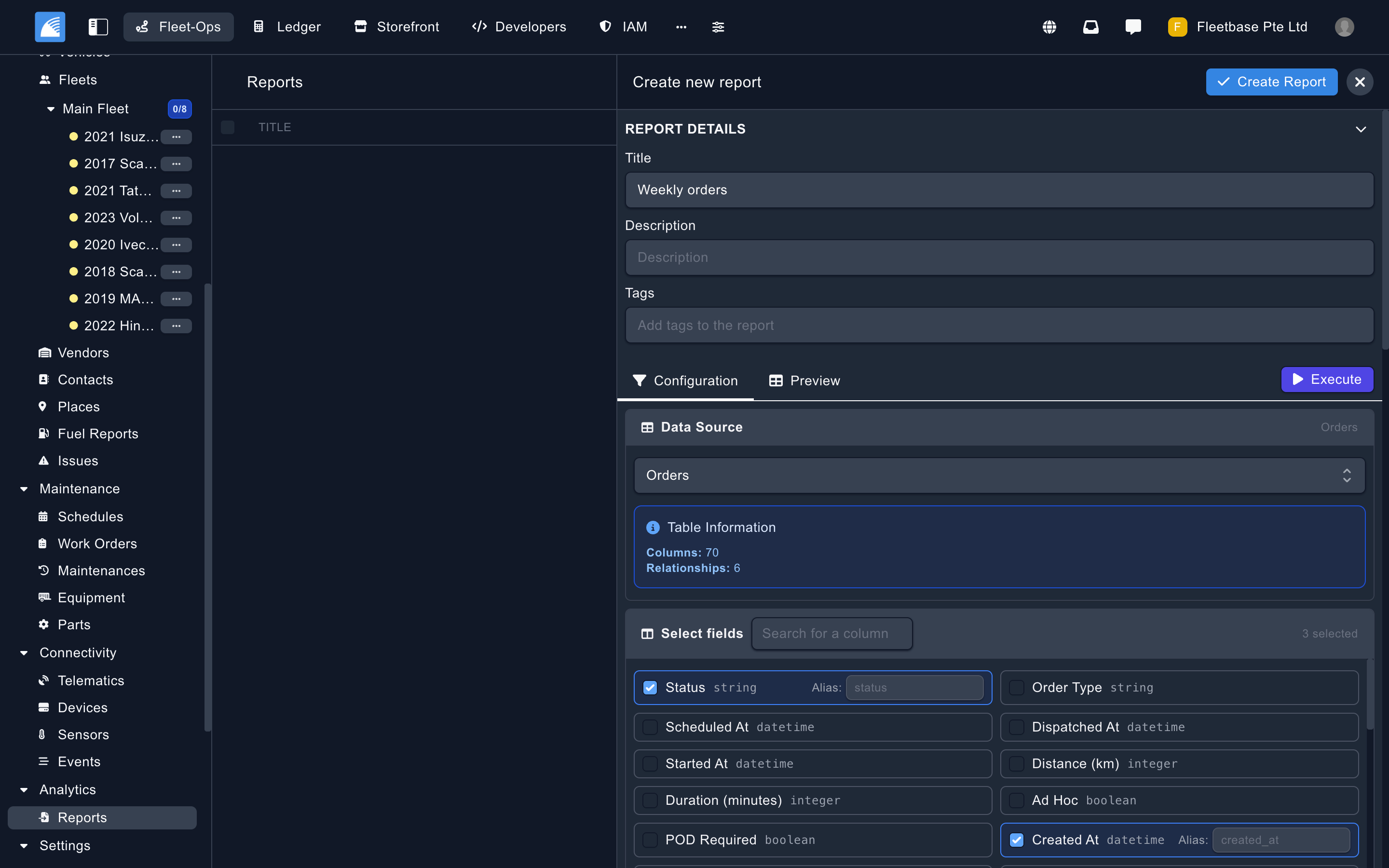
More built-in, out of the box
Every feature your team needs, without the integrations tax.
“The API documentation is actually complete — that alone puts Fleetbase ahead of every other logistics platform I've worked with. We integrated our custom OMS in two days and built a custom extension for our specialized cargo requirements in a week.”
Common questions
Everything you need to know before getting started.
Where is the Fleetbase source code?
The full source code is on GitHub at github.com/fleetbase. The backend is Laravel/PHP and the frontend is Ember.js — all licensed under AGPL-3.0 with a commercial licence available for proprietary modifications.
Is there a JavaScript SDK?
Yes. The official Fleetbase JS SDK provides typed, documented access to the full REST API. React Native bindings are also available for mobile app integration.
Can we build custom modules that run inside the Fleetbase console?
Yes. The Extensions SDK lets you build custom backend routes and models in Laravel, and custom frontend panels in Ember.js — all running inside the existing authentication and permission system. A scaffold generator bootstraps new extensions in minutes.
How do we deploy Fleetbase in production?
Kubernetes Helm charts are available for production deployment on any cloud provider or on-premise environment. Docker Compose is used for development and staging. Configuration is fully managed via environment variables.
Are there rate limits on the API?
Cloud plans have configurable rate limits per API key. Self-hosted deployments have no platform-enforced rate limits — you control the infrastructure and its capacity.
Build your logistics infrastructure on a platform you control
Open source, API-first, and built to be extended. Start your free trial or clone the repo — your logistics platform, your rules.
7-day free trial · Full platform access